A door unlocked
Employment, education, housing, travel, and ordinary dignity were distributed along the color line.
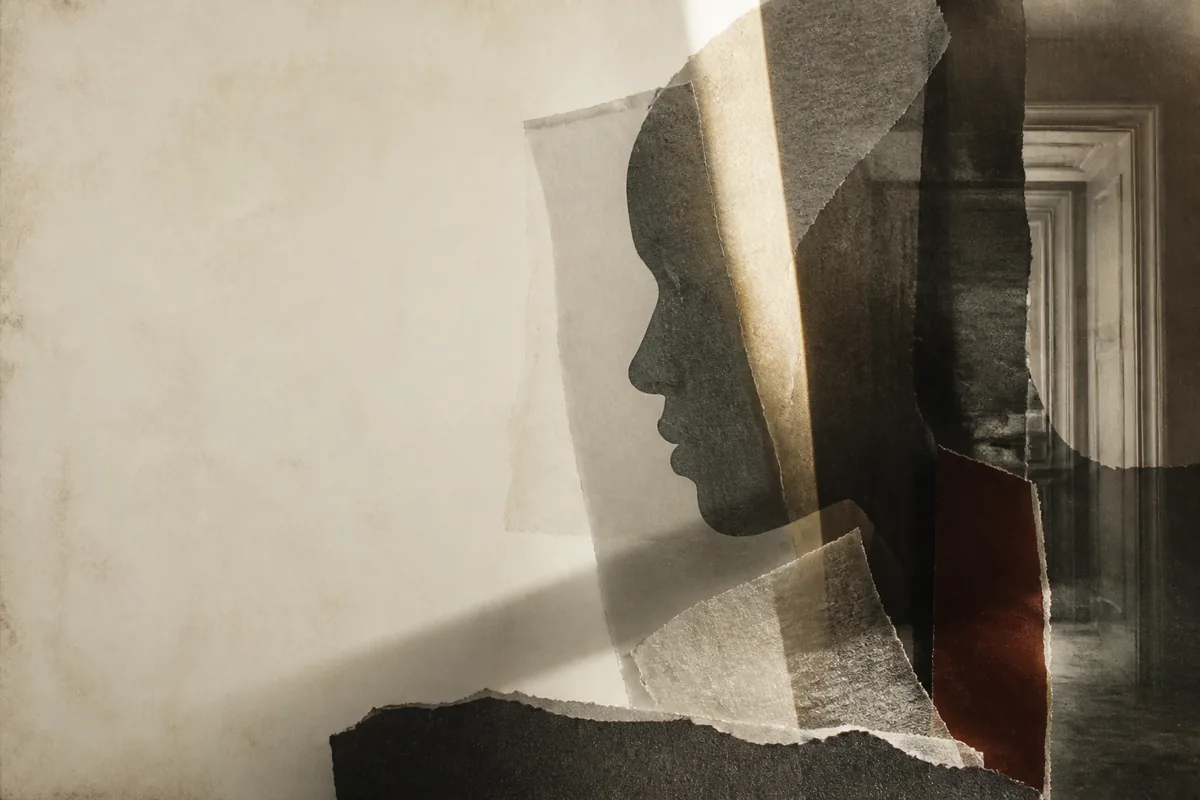
Stories across the color line
Passing could open a door. It could also close every door behind you. Passe Blanc explores the lives, books, and films held in that impossible distance.
Enter the storyIdentity is personal. Race was made political.
A working definition
To pass is to be read as belonging to a group that society has placed above your own—and sometimes to live inside that reading.
In the United States, racial passing most often describes a Black person with light skin being perceived as white. It was never simply disguise. It emerged from a system that attached safety, work, housing, movement, and legal recognition to a racial category.
Some passed for an hour, on a train or at a counter. Some passed at work. Some crossed permanently and built lives that depended on silence. The choice could be strategic, involuntary, liberating, lonely—or all of these at once.
The architecture around a choice
Employment, education, housing, travel, and ordinary dignity were distributed along the color line.
Discovery could cost a person work, home, safety, standing—and the future they had built.
Crossing could mean separation from family, community, memory, and the people who knew the whole name.
A life at the threshold
He could have disappeared into whiteness. Instead, he used its presumption as evidence.
White was a Black civil-rights leader whose appearance allowed strangers to mistake him for white. From 1918 he traveled through the South at extraordinary personal risk, entering hostile communities and investigating lynchings and race riots for the NAACP.
His story turns the usual narrative inside out. Appearance did not settle identity. Other people’s certainty became a tool for exposing the violence behind their categories.
Read his storyA selective chronology
Each era retells passing in its own language. The questions remain: Who gets to name a person? What does recognition demand? What is the price of being safe?
All storiesA novel disguised as a confession, about a man who crosses the color line and spends the rest of his life counting what it cost.
Two women who grew up together meet again on either side of the color line, and neither can look away from the other.
A studio melodrama puts a Black daughter who can be read as white at the emotional center of the story, and the film cannot fully contain her.
A New England doctor and his family, taken for white by their town for years, see their history made public, and the story becomes a Hollywood film.
Rebecca Hall's adaptation returns Nella Larsen's questions to the screen in a deliberately constrained black-and-white frame.
Passing is not proof that race is trivial.
It is proof that race is constructed—
and its consequences were made brutally real.
A place to begin
Primary works and trusted guides for reading further. Every link opens at its source. Enter the reading room.
The essential novel: desire, danger, friendship, and the instability of being seen.
A fictional autobiography about opportunity gained and inheritance relinquished.
A landmark and deeply ambivalent film about labor, kinship, gender, and passing.
Editorial note
Passe Blanc treats passing as lived history, not a puzzle to solve or a verdict to deliver. The archive centers context, contradiction, and the words people chose for themselves.
This first edition is a beginning. Future stories should be researched, sourced, and told without turning private histories into spectacle. How we work.